Going Back to Go Forward: Why Adults Are Picking Up Childhood Coloring Books Again
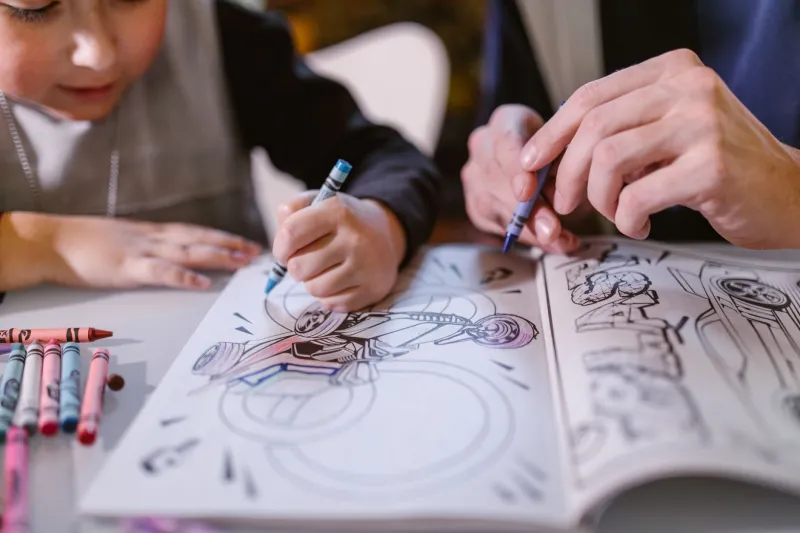
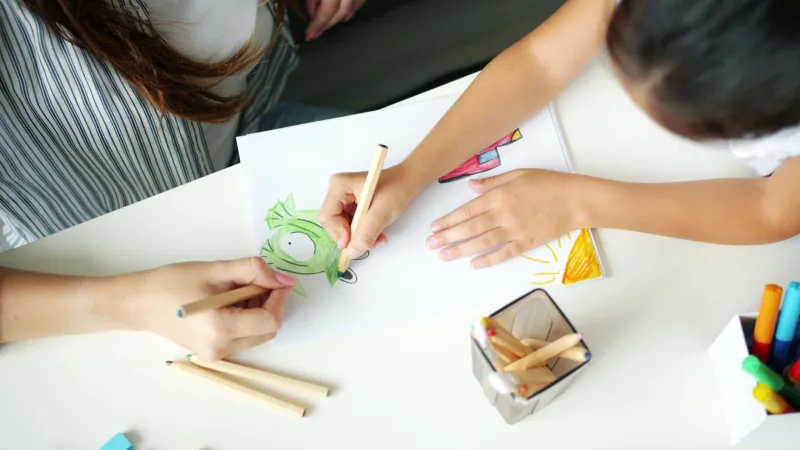
Something quietly remarkable is happening in living rooms from Portland to Pittsburgh. Millennials and Gen Xers — people who grew up on Saturday morning cartoons, Lisa Frank folders, and 64-count Crayola boxes — are pulling out coloring books that look suspiciously like the ones they used at age seven. Not the intricate mandala books that flooded bookstore shelves a decade ago. The old-school stuff. Simple line drawings of animals, neighborhood scenes, and fairy tale characters.
And they're not doing it ironically.
The Nostalgia Loop: More Than Just a Trip Down Memory Lane
Nostalgia gets a bad reputation. We tend to treat it like an indulgence — something you wallow in for a few minutes before snapping back to your to-do list. But researchers have started looking at nostalgia very differently in recent years. Far from being a passive emotional state, nostalgia appears to be a psychological tool. Studies from institutions like the University of Southampton have found that nostalgic reflection actually boosts mood, increases feelings of social connectedness, and even makes people feel like their lives carry more meaning.
Now pair that with coloring — an activity that already has documented benefits for stress reduction and present-moment focus — and you've got something interesting on your hands.
Dr. Clay Routledge, a behavioral scientist who has published extensively on nostalgia, describes it as "a resource that people can use to maintain their psychological wellbeing." When adults sit down with a coloring book that echoes the visual language of their childhood, they're not just filling in lines. They're activating memory pathways tied to safety, simplicity, and a time when the world felt more manageable.
Why Familiar Images Hit Different
Here's what separates childhood-style coloring from the abstract adult coloring books that became a phenomenon around 2015: recognition.
When you sit down with a complex geometric pattern, your brain engages in a particular way — focused, analytical, almost meditative in a forward-facing sense. But when you open a page featuring a cartoon dog or a simple house with a picket fence, something else kicks in. You know this image. You have a relationship with it. That recognition triggers what psychologists call "autobiographical memory" — personal recollections tied to who you were and how you felt at a specific point in your life.
For many adults, especially those who grew up in the '80s and '90s, coloring was one of the few truly low-stakes creative activities they had access to. No grades. No performance pressure. Just a blank page and a box of colors. Returning to that format as an adult can replicate some of those same psychological conditions — a kind of emotional permission slip to just be without producing anything impressive.
Grounding Through Creativity: What Therapists Are Noticing
Art therapists working with adult clients have started paying attention to this shift. The deliberate choice of simple, familiar imagery — rather than sophisticated or abstract designs — appears to serve a grounding function that's distinct from other mindfulness practices.
"Grounding techniques are meant to bring someone back to the present moment by anchoring them to something concrete and sensory," explains one approach common in trauma-informed therapy. Coloring already does this through the physical sensation of pen or crayon on paper, the visual feedback of color filling space. But childhood-themed imagery adds an emotional anchor on top of that sensory one. You're not just present in the room. You're connected to a version of yourself that existed before adult stress took hold.
This dual-layered effect — sensory grounding plus emotional continuity — may be part of why so many people describe childhood-style coloring as feeling more comforting than other relaxation methods they've tried.
The Digital Dimension: Nostalgia Goes Online
Here at Coloring Fun, we've noticed something in our own community worth mentioning. Digital coloring tools have made it easier than ever to access exactly the kind of imagery that triggers that nostalgic response — without having to hunt through thrift store bins for a vintage Sesame Street coloring book.
Simple, bold line-art designs that echo classic children's illustration styles are consistently among the most-reached-for options on platforms like ours. Adults aren't just tolerating these "simpler" designs. They're actively seeking them out. And the comments they leave tell the story: "This reminds me of Saturday mornings." "I used to have this exact type of book." "I forgot how much I loved doing this."
That last one is the kicker. Forgot. Because one of the side effects of growing up is that we bury certain joys under layers of responsibility and self-consciousness. Nostalgia-driven coloring has a way of unearthing them.
Is It Actually Good for You? Here's What the Evidence Suggests
Let's be honest — there isn't a mountain of clinical research specifically on childhood-themed coloring books for adults. But the building blocks are there. We know nostalgia reduces anxiety and loneliness. We know creative activities lower cortisol levels. We know that simple, repetitive tasks can quiet the default mode network of the brain — that's the part that tends to spin out into worry and rumination.
Combine those three effects and the mental health case for picking up a crayon and coloring a cartoon elephant becomes surprisingly solid.
Some therapists are even incorporating it deliberately into sessions with clients dealing with burnout, grief, or anxiety. The instruction is simple: bring in something that looks like what you would have colored as a kid. Spend ten minutes on it. Notice what comes up.
What comes up, more often than not, is something that feels a lot like relief.
How to Start Your Own Nostalgia Coloring Practice
If you're curious about trying this for yourself, the bar to entry is about as low as it gets.
Start with imagery that actually resonates. Don't just grab any simple coloring page. Think about what you loved as a kid. Farm animals? Outer space? Classic fairy tales? The more personally meaningful the imagery, the more likely it is to activate that emotional memory pathway.
Let yourself color badly. One of the biggest gifts of returning to childhood coloring is releasing the pressure to produce something beautiful. Go outside the lines. Pick colors that don't make sense. This isn't about the output.
Try digital tools if physical supplies feel like a barrier. Platforms like Coloring Fun let you experiment with childhood-style designs without needing to stock up on supplies first. The tactile experience is different from physical coloring, but the psychological benefits of engaging with familiar imagery still apply.
Make it a ritual, not a task. Put on a playlist from your childhood. Make your favorite childhood snack. Let the whole experience become a deliberate act of reconnection rather than just another item on your wellness checklist.
The Bigger Picture
There's something worth sitting with here that goes beyond stress relief tips and brain science. In a cultural moment that often demands we optimize everything — our productivity, our health, our leisure time — there's a quiet rebellion in choosing to color a cartoon bunny on a Tuesday evening just because it makes you feel like yourself again.
Nostalgia-driven creativity isn't about escaping adulthood. It's about remembering that the person you were at seven years old — the one who grabbed a purple crayon without overthinking it — is still in there. And sometimes, that person deserves a little time on the page.