The Long Game: What Coloring a Full Page Teaches You About Sticking With Things
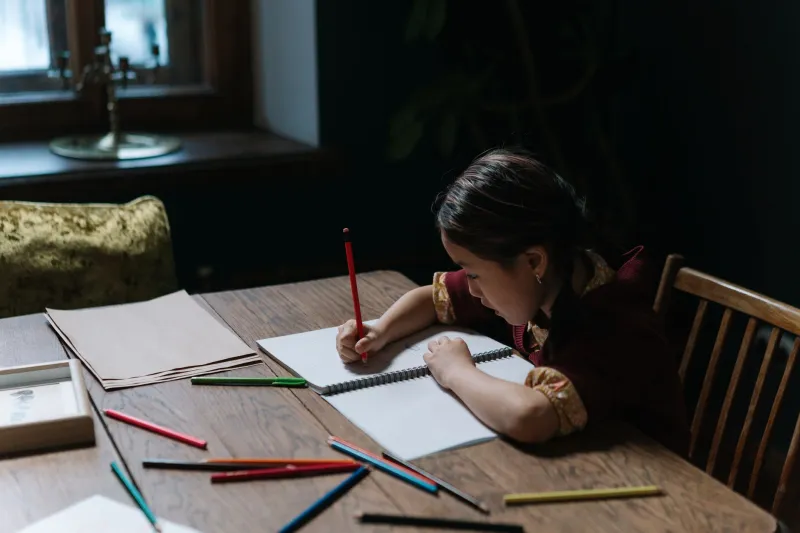
Let's be honest: starting a coloring project feels amazing. You pick your palette, choose your page, and dive in with all the enthusiasm in the world. But somewhere around the halfway mark—when the background still needs three more colors and your hand is a little tired—things get interesting. That's the moment where the real learning happens.
Coloring, whether you're doing it digitally on a platform like Coloring Fun or working through a printed design spread out on the kitchen table, has a sneaky way of teaching patience. Not the kind of patience that feels like waiting in line, but the active, engaged kind—where you're constantly making small decisions, adjusting your approach, and choosing to keep going anyway.
Why the Middle of a Project Is Where Growth Happens
Psychologists who study self-regulation talk a lot about something called "delayed gratification"—the ability to push through discomfort now in exchange for a better outcome later. It's the same skill that helps kids finish their homework before watching TV, or helps adults save money instead of impulse buying. And it turns out, coloring is one of the most accessible ways to practice it.
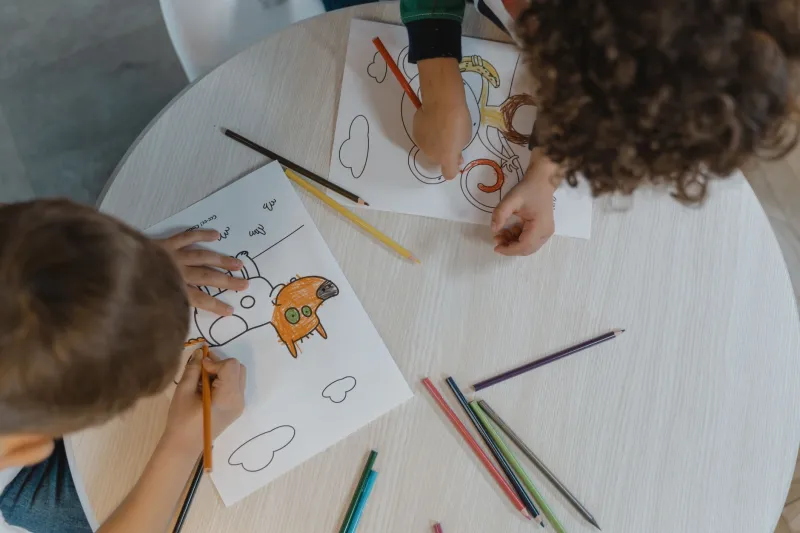
When a child sits down with a detailed mandala or an intricate animal scene, they're not just filling in shapes. They're repeatedly choosing to continue. Every section completed is a small decision: I'm going to keep going. Over time, those decisions add up to something much bigger than a finished page.
Dr. Stuart Brown, a researcher who has spent decades studying play, has noted that creative activities with a visible endpoint—where you can literally see progress accumulating—are particularly effective at building what he calls "persistence through play." Coloring fits that description almost perfectly. You can look at your page after ten minutes and see exactly how far you've come. That visible progress is motivating in a way that more abstract tasks simply aren't.
Real Kids, Real Breakthroughs
Take Maya, a nine-year-old from outside of Austin, Texas, whose mom started sharing their coloring sessions on a family blog. Maya had always struggled with finishing things—art projects, chapter books, even puzzles. She'd get excited, hit a wall, and move on. Her mom introduced her to longer, more complex printable pages from Coloring Fun, and they made a rule: one page per weekend, start to finish.
"The first few times she wanted to quit," her mom wrote. "But we kept talking about what the finished version would look like, and she'd push through. By the third or fourth page, she stopped asking to quit. She started talking about what she'd do next instead."
That shift—from "can I stop?" to "what comes next?"—is exactly the kind of internal change that child development experts point to when they talk about building a growth mindset. The coloring page became a low-stakes training ground for a high-value life skill.
Adults Aren't Immune to Impatience—Or to This Fix
Here's something a lot of people don't talk about: adults struggle with patience too. In a world of two-day shipping, instant streaming, and notifications that demand immediate responses, sitting with something slow and unfinished can feel almost uncomfortable at first.
Jordan, a 34-year-old software developer from Portland, Oregon, started using Coloring Fun's digital tools during a particularly stressful stretch at work. He'd always been a "finish it fast" kind of person—efficient, results-driven, constantly moving. Coloring slowed him down in a way that initially drove him a little crazy.
"I kept wanting to rush," he said. "Skip sections, use one color for everything, just get to the end. But then I started actually looking at what I was making, and I realized the pages I rushed looked bad. So I slowed down. And something shifted."
What shifted, he explained, was his relationship with the process itself. He started to find satisfaction not just in the finished product but in the act of working carefully through each section. That attitude, he said, started bleeding into his professional life. He became more comfortable with long-term projects. He stopped feeling anxious when solutions didn't appear immediately.
This isn't just anecdotal. Research published in the Journal of Positive Psychology found that engagement in creative activities—including visual art—was associated with increased psychological resilience and improved ability to tolerate uncertainty. Coloring, with its blend of structure and creative choice, seems to hit a particularly useful sweet spot.
The Blending Effect: Why Imperfection Is Part of the Lesson
One of the most underrated parts of a coloring session is what happens when something doesn't go the way you planned. You choose a color that doesn't quite work. You go outside the lines. You realize halfway through that your shading is inconsistent.
In those moments, you have a choice: start over, give up, or adapt.
Most experienced colorists—and even kids who've been at it for a while—learn to adapt. They blend the unexpected color into something new. They turn the stray line into a shadow. They adjust and continue. This is creative problem-solving in its most accessible form, and it mirrors exactly the kind of flexible thinking that helps people navigate challenges at school, at work, and in relationships.
Digital coloring tools make this especially interesting, because the "undo" button is always there—but seasoned users often find themselves using it less over time. Not because they're making fewer mistakes, but because they've gotten comfortable working with imperfection instead of against it.
Building the Habit, One Page at a Time
If you want to use coloring as a genuine patience-building practice—for yourself, your kids, or both—a few simple approaches can help:
Choose projects that take more than one sitting. Single-session pages are great, but multi-session projects build a different kind of commitment. You have to come back. You have to remember where you were and choose to continue.
Resist the urge to switch pages mid-project. It's tempting, especially when a shinier design catches your eye. But finishing what you started, even when it's no longer the most exciting option, is exactly the muscle you're trying to build.
Talk about the process, not just the result. With kids especially, ask questions like "Which part was hardest to get through?" or "What would you do differently next time?" This reinforces the idea that the journey matters as much as the destination.
Celebrate the halfway point. Finishing is great, but acknowledging progress mid-project helps maintain momentum and teaches that effort itself is worth recognizing.
The Finished Page Is Just the Beginning
There's a reason finishing a coloring page feels so deeply satisfying—and it's not just about the pretty colors. It's about the fact that you stayed. You made hundreds of small choices over the course of that project, and every single one of them was a vote for your own ability to follow through.
That's not a small thing. That's actually a pretty big thing.
Whether you're a kid learning for the first time that you can finish something hard, or an adult rediscovering the value of slow, careful work, the coloring page in front of you is more than a picture. It's practice. And like any practice, the more you show up for it, the more it shows up for you—in ways you might not expect, in places far beyond the page.