No Barriers, Just Color: How Digital Art Tools Are Opening Creative Doors for Everyone
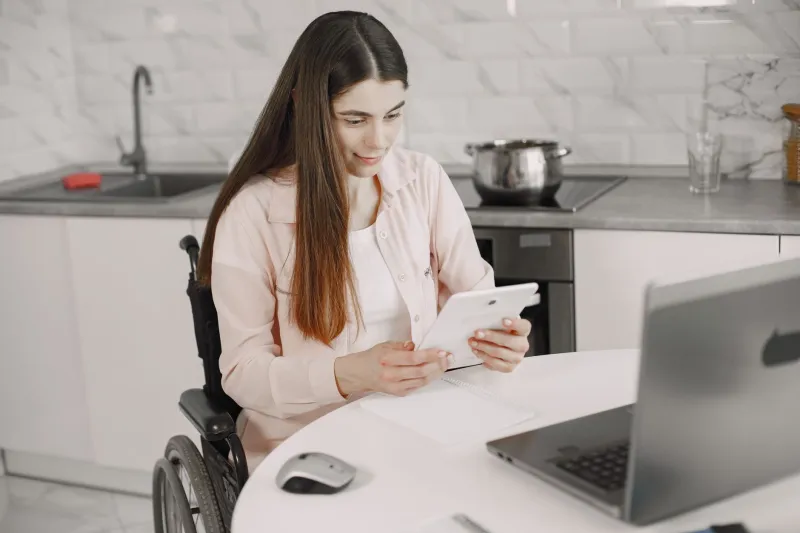
For a long time, making art required a specific set of physical abilities that a lot of people simply didn't have. Gripping a pencil. Seeing fine details on a page. Sitting still long enough to finish a drawing without feeling overwhelmed. For millions of Americans living with disabilities — whether physical, visual, or neurological — those requirements quietly closed a door that most people never even noticed was there.
Digital coloring is helping open it back up.
Across the country, people with motor disabilities, visual impairments, ADHD, autism spectrum conditions, and a wide range of other differences are discovering that online coloring platforms give them something traditional art materials often couldn't: flexibility. The ability to zoom in, undo a mistake instantly, adjust contrast, use a stylus instead of a brush, or even speak commands instead of clicking — these features aren't just convenient. For many users, they're genuinely life-changing.
Why Traditional Art Has Always Had an Accessibility Problem
It's not that art has ever been intentionally exclusive. But the physical demands of conventional art-making — fine motor control, color differentiation, sustained focus, precise hand-eye coordination — have always favored people whose bodies and brains work in particular ways.
For someone with rheumatoid arthritis, holding a colored pencil for twenty minutes can be painful. For a person with low vision, distinguishing between similar shades on a printed page is genuinely difficult. For a child with sensory processing differences, the smell of paint or the texture of paper might create real distress before a single mark is even made.
Digital platforms sidestep many of these friction points entirely. And as those platforms have grown more sophisticated, the accessibility features built into them have become increasingly thoughtful.
Voice Controls and Hands-Free Creating
One of the most significant developments in accessible digital art has been the integration of voice command functionality. For users with limited hand mobility — including those with cerebral palsy, spinal cord injuries, or conditions like multiple sclerosis — the ability to select colors, zoom in on a canvas, or switch between tools without using a mouse or touchscreen is enormous.
Marcos, a 34-year-old from San Antonio who was diagnosed with a progressive neuromuscular condition in his late twenties, started using digital coloring platforms about two years ago. "I used to paint with acrylics," he says. "When my grip started going, I thought that part of my life was just done. But I can still do this. I can still make something that looks the way I want it to look."
For Marcos, the combination of a tablet stylus (which requires far less grip pressure than a traditional brush) and voice-assisted navigation has kept creativity accessible even as his physical limitations have increased.
Enlarged Canvases and Visual Accessibility
For users with low vision or visual processing differences, the ability to dramatically enlarge a coloring canvas is more than a zoom feature — it's a fundamental shift in how accessible the activity becomes.
Printable coloring pages, no matter how beautifully designed, are fixed. The lines are the lines. But on a digital platform, those lines can be made as large as a user needs. High-contrast display modes, adjustable color palettes, and the option to toggle between light and dark backgrounds all make a meaningful difference for users who struggle with standard visual presentations.
Jamila, a 61-year-old retired teacher from Atlanta who has macular degeneration, was introduced to digital coloring by her granddaughter. "I honestly thought coloring was something I'd never be able to do again," she says. "But when I zoom in and use the high-contrast settings, I can see exactly what I'm doing. It's meditative for me now. I do it every morning."
Her granddaughter, she notes with a laugh, has since gotten just as into it as she has.
Neurodivergent Users and the Freedom to Customize
For many neurodivergent individuals — including those with ADHD, autism, dyslexia, or sensory processing differences — the appeal of digital coloring goes beyond physical accessibility. It's about control.
Digital platforms allow users to work at their own pace, without the pressure of ruining a physical page. Mistakes disappear with a single tap. The interface can often be simplified or customized to reduce visual clutter. There are no smells, no textures, no mess. For someone who finds sensory stimulation overwhelming, that sterile simplicity isn't a drawback — it's a feature.
Occupational therapists have taken note. Several practitioners working with autistic children and adults have begun incorporating digital coloring into therapeutic sessions, citing the low-stakes, highly controllable environment as particularly well-suited to clients who benefit from predictability.
"The undo button alone changes everything," says one OT who works with neurodivergent teens in the Pacific Northwest. "A lot of my clients shut down completely when they make a mistake they can't fix. Digitally, nothing is ever permanent. That removes a huge source of anxiety."
The Social Dimension
Another underappreciated aspect of digital coloring's accessibility revolution is its social component. Online coloring communities — where users share finished pages, offer encouragement, and sometimes collaborate on projects — give people who might be homebound or socially isolated a genuine sense of belonging.
For individuals with disabilities that limit mobility or make in-person social interaction difficult, these communities can be surprisingly meaningful. The shared activity of coloring creates common ground, and the low-pressure nature of the hobby makes it easier to engage without feeling judged.
What Platforms Are Still Getting Wrong
It would be dishonest to suggest that the digital coloring world has fully solved its accessibility challenges. Many platforms still lack robust screen reader compatibility. Tutorials are frequently video-only, without captions or transcripts. Color-selection tools often rely on visual cues alone, making them difficult for colorblind users to navigate confidently.
There's also the hardware question. The tablets and styluses that make digital coloring most accessible aren't cheap, and for lower-income users with disabilities — a group that faces disproportionate economic barriers — the cost of entry can still be prohibitive.
Advocates argue that platform developers need to treat accessibility as a core design priority rather than an afterthought. The good news is that user feedback is increasingly driving real change, and the most engaged communities tend to be vocal about what they need.
Color as a Universal Language
What strikes you, when you talk to people across the disability community about digital coloring, is how consistently they come back to the same idea: art isn't a luxury. The need to make something, to express something, to sit with color and shape and say I made this — that's human. It doesn't belong to people with perfect fine motor skills or 20/20 vision or neurotypical brains.
Digital coloring platforms, at their best, are honoring that. They're building tools that say: whoever you are, whatever your body or brain does or doesn't do easily, there's a canvas here with your name on it.
And honestly? That's what coloring has always been about. Come as you are, pick your colors, and make something that's entirely yours.