When Words Aren't Enough: How Coloring Helps Kids Work Through Their Hardest Feelings
Ask a seven-year-old why they're upset, and you'll often get a shrug. Not because they don't feel anything — quite the opposite. Kids are swimming in emotions that their developing brains simply don't have the vocabulary or the neural wiring to explain yet. That gap between feeling and language is where a lot of childhood suffering quietly lives.
But here's something that might surprise you: a box of colored pencils — or a digital coloring screen — might be one of the most effective bridges across that gap.
Coloring has long been considered a fun pastime, a rainy-day activity, or a classroom time-filler. What's becoming clearer, though, is that for many children, it's something far more significant. Therapists, educators, and parents across the country are watching kids use coloring not just to stay busy, but to genuinely heal.
What's Actually Happening in the Brain
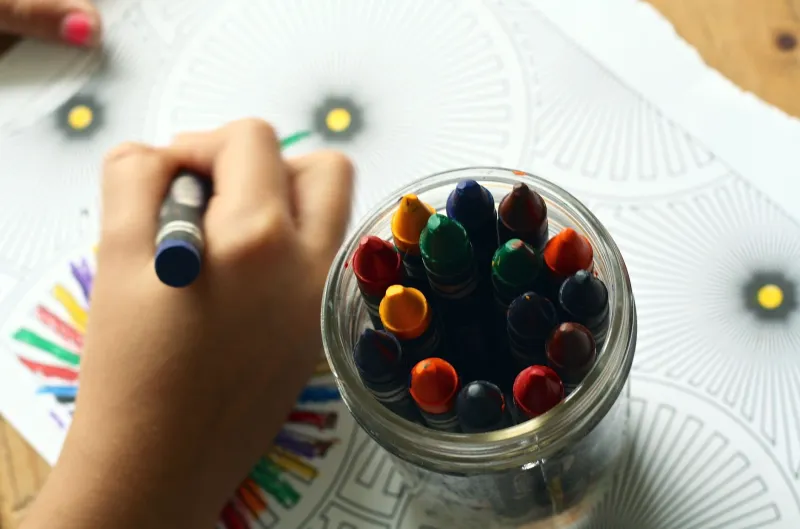
When a child picks up a crayon or taps a color on a digital coloring app, something interesting kicks off neurologically. The repetitive, rhythmic motion of coloring — filling in spaces, staying within lines, blending shades — activates the parasympathetic nervous system. That's the part of your brain responsible for calming the body down after stress. Heart rate slows. Breathing deepens. Cortisol levels drop.
Dr. Cathy Malchiodi, a licensed psychologist and one of the country's leading voices in art therapy, has written extensively about how art-making — including simple coloring — helps regulate the nervous system in ways that talk therapy sometimes can't reach, especially in young children. The body, she argues, often holds emotional experience before the mind can process it. Creative, hands-on activities let kids access and release those stored feelings without needing to articulate them.
There's also something worth noting about color choice specifically. When children select colors — whether they reach for dark purples and heavy blacks or bright yellows and soft pinks — they're often making unconscious emotional decisions. Art therapists pay close attention to these patterns. A child who consistently gravitates toward stormy, dark palettes during a difficult period at home or school isn't just picking colors randomly. They're communicating.
Real Stories From Real Families
Take Maya, an eight-year-old from outside of Chicago whose parents went through a divorce last year. Her mom, Renee, noticed that Maya stopped talking much around the time things got tense at home. She became withdrawn, clingy at bedtime, and quick to cry over small things.
"Her therapist suggested we try art activities at home between sessions," Renee explains. "We started pulling up coloring pages online most evenings. What I noticed was that she'd get really into it — like, deeply focused. And then she'd start talking. Not about the divorce directly, but about the pictures. About why she chose certain colors. And slowly, the real stuff would come out."
Renee describes one particular evening when Maya was coloring a page with a big, intricate forest scene. She colored all the trees black. When Renee gently asked about it, Maya said the forest felt "scary and alone." That opened a conversation they hadn't been able to have before.
Stories like this are more common than you might think. Parents of kids dealing with anxiety, grief, school bullying, and big life transitions are increasingly turning to coloring — both printable pages and digital platforms — as a way to lower the emotional temperature and create space for connection.
How Therapists Are Using It
Child psychologists and licensed art therapists don't use coloring as a replacement for clinical treatment, but many incorporate it as a complementary tool — especially in early sessions when kids are still getting comfortable.
"Coloring gives kids something to do with their hands, which reduces the pressure of eye contact and direct questioning," says one child therapist based in Austin, Texas, who works primarily with kids ages five through twelve. "When a child feels like they're just coloring, they're more relaxed. And relaxed kids talk more. They reveal more."
She often uses themed coloring pages — animals, nature scenes, family settings — as gentle prompts. A kid coloring a family of bears might spontaneously start talking about their own family. A child coloring a stormy sky might begin describing how they feel inside. The image becomes a safe container for the emotion.
For kids dealing with anxiety specifically, the structured nature of coloring pages is part of what makes them effective. There are boundaries. There's a clear space to fill. That sense of order can be deeply soothing for a child whose inner world feels chaotic. Completing a page — seeing something go from blank to finished — also builds a small but meaningful sense of accomplishment and control.
Digital Coloring and Its Unique Advantages
Printable coloring pages have obvious appeal — there's something tactile and grounding about paper and pencils. But digital coloring platforms bring their own set of benefits for kids working through emotional challenges.
For one, the "undo" button is huge. Kids who struggle with perfectionism or who feel easily frustrated can experiment freely without the fear of ruining something. That psychological safety encourages risk-taking — trying a bold color, making a mistake, fixing it — which mirrors the kind of emotional flexibility therapists actively try to build.
Digital coloring also removes some of the mess-related anxiety that some sensitive kids experience. And for children with certain sensory or motor challenges, touch-screen interfaces can actually be easier to navigate than holding a pencil for extended periods.
Platforms like Coloring Fun give kids access to hundreds of designs, from simple and soothing to detailed and complex, so they can choose something that matches their mood or their therapeutic goals on any given day.
Tips for Parents Who Want to Try This at Home
You don't need a therapist in the room to use coloring as an emotional outlet for your child. Here are a few simple ways to make it part of your routine:
Let them lead the color choices. Resist the urge to suggest "happy" colors. Whatever they pick is valid — and potentially informative.
Sit nearby without hovering. Presence matters. You don't need to engage directly, but being in the same room signals safety and opens the door for spontaneous conversation.
Ask open-ended questions about the art, not the feelings. Instead of "Are you sad?" try "Tell me about the colors you picked for this part." Let the picture carry the conversation.
Make it a regular thing, not just a crisis tool. Coloring works best when it's woven into daily or weekly life, not only pulled out during emergencies.
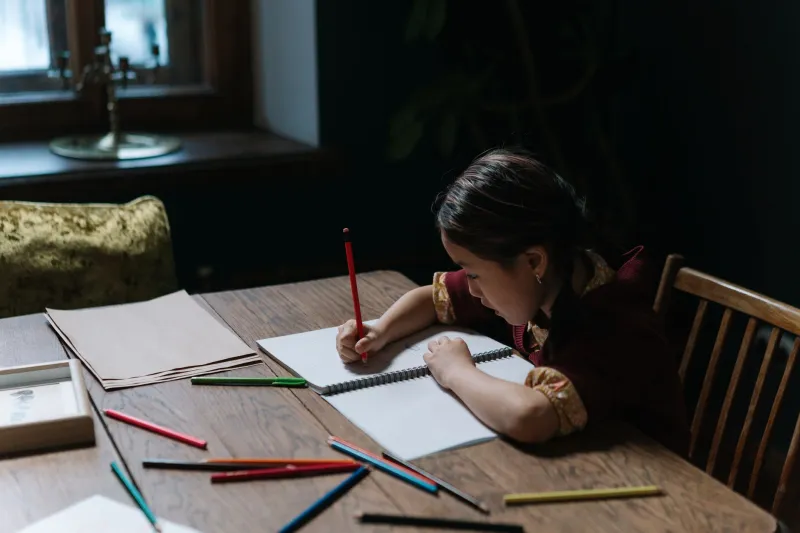
Don't push for conclusions. Sometimes a child colors in silence and nothing is said. That's okay. The regulation still happens, even without words.
Color Is a Language
Kids have always communicated through play. What art therapists and parents are recognizing more clearly now is that coloring — whether it's a printed page spread out on the kitchen table or a glowing tablet screen at the end of a hard day — is a form of that play with real emotional depth.
It's not magic. It's not a substitute for professional support when that's needed. But for millions of children navigating anxiety, loss, confusion, and change, picking up a color and filling in a page is a way of saying something that they don't yet have words for.
And sometimes, that's exactly enough to start.