Put Down the Phone: How a Coloring Page Might Be the Sleep Hack You've Been Missing
It's 10:47 PM. You've told yourself three times you're going to bed "in a minute," but here you are, still scrolling. Sound familiar? You're not alone — the American Academy of Sleep Medicine estimates that nearly 70 million Americans deal with some form of chronic sleep problem, and a huge chunk of that is tied to what we do in the hour before we close our eyes.
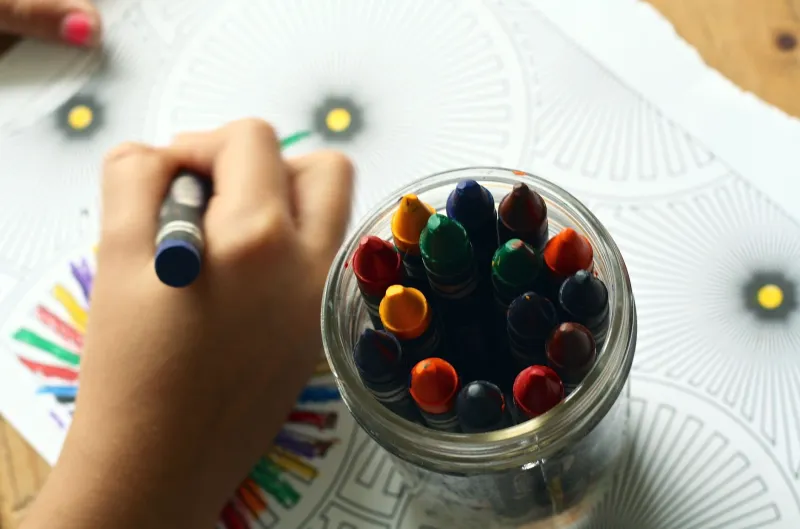
Here's the thing nobody's really talking about: the answer might not be a new supplement, a white noise machine, or yet another meditation app. For a growing number of people across the country, the secret weapon is a coloring page and a fresh set of colored pencils.
Why Screens Are Quietly Wrecking Your Wind-Down
Before we get into the good stuff, let's talk about why your current bedtime routine might be working against you. Phones, tablets, and laptops emit blue-wavelength light — the same kind that tells your brain it's the middle of the afternoon. When you're bathed in that glow at 11 PM, your body holds back on producing melatonin, the hormone that makes you feel drowsy and ready for sleep.
But it's not just the light. Scrolling social media, reading news headlines, or catching up on work emails keeps your brain in a state of low-level alert. You're processing, reacting, comparing, worrying. That mental chatter doesn't just stop the moment you set your phone face-down. It lingers, sometimes for hours.
Coloring does the opposite.
What Happens in Your Brain When You Color at Night
Researchers studying art-based interventions have found that repetitive, focused creative tasks — like filling in a mandala or working through a detailed nature scene — activate the brain's default mode network in a way that's genuinely restorative. It's a kind of engaged calm: your hands are busy, your mind has just enough to focus on, and the mental noise starts to fade.
Dr. Stan Rodski, a neuropsychologist who has studied coloring's effects on the brain, has described the activity as producing a brainwave state similar to meditation. That's not nothing. And unlike meditation, which can feel frustratingly hard to do when your brain is buzzing, coloring gives you something to actually do — which makes it a lot easier to stick with.
The act of choosing colors, staying inside lines (or deliberately not), and watching a page slowly come to life is grounding in a way that's hard to replicate. Your focus narrows. Your breathing slows. Your shoulders drop about two inches without you even noticing.
Real People, Real Results
Ask around and you'll find plenty of folks who've made the switch — and swear by it.
Jamie, a high school teacher from Columbus, Ohio, started coloring before bed after her therapist suggested finding a screen-free wind-down activity. "I thought it was going to feel silly, honestly. Like arts and crafts for a grown adult at midnight," she laughs. "But within a week I was falling asleep faster, and I wasn't waking up at 3 AM with my brain going a million miles an hour."
Marcos, a software engineer in Austin, keeps a small basket of supplies on his nightstand. "I work with screens all day. The last thing I need is more screen time before bed. Coloring is this totally different kind of focus — it's almost meditative but without the pressure to 'clear your mind.' I just color and suddenly it's time to sleep."
These aren't outliers. Online communities dedicated to adult coloring are full of threads from people describing the same shift: less tossing and turning, more actual rest.
Setting Up Your Late-Night Coloring Corner
You don't need a dedicated art studio or a big investment to make this work. Here's how to create a simple, cozy setup that signals to your body it's time to slow down.
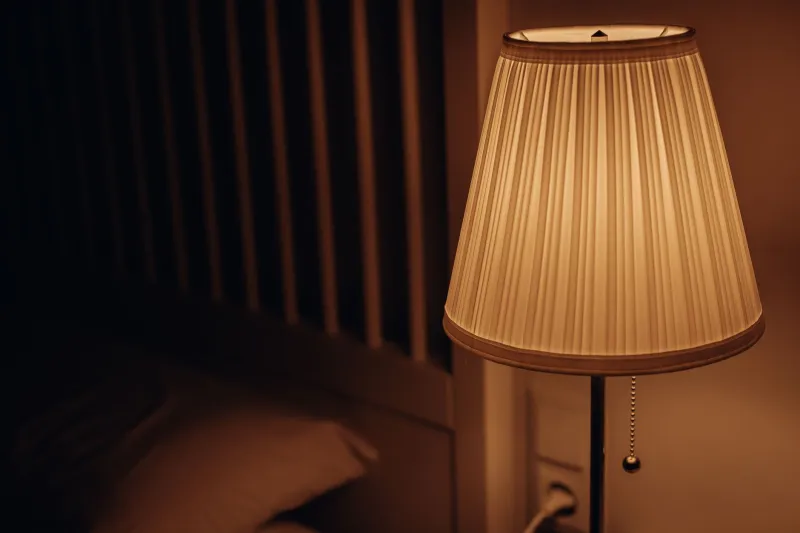
Keep it warm and dim. Overhead lighting is too harsh and too stimulating. Swap it for a warm-toned lamp or a string of soft Edison bulbs. The goal is ambiance, not visibility under surgical conditions. A good lamp positioned over your coloring page is all you need.
Build a small supply kit. A set of colored pencils, a few fine-tip markers, and a stack of printable coloring pages is genuinely all it takes to get started. Keep them somewhere easy to grab — a basket, a small tray on your nightstand, a dedicated drawer. Friction is the enemy of new habits. The easier it is to start, the more likely you'll actually do it.
Choose your pages wisely. Intricate, highly detailed pages are great for daytime when you have energy and focus to burn. At night, reach for something simpler — flowing patterns, gentle landscapes, mandalas with medium-sized sections. The goal isn't to finish a masterpiece. It's to let your brain coast.
Pair it with something soothing. A cup of herbal tea, a podcast playing softly in the background, or just comfortable silence. Some people love low-key instrumental music. Find what feels like an exhale for you and layer it in.
Set a loose time limit. You don't need to color for two hours. Even 20 to 30 minutes of screen-free creative time can meaningfully shift your pre-sleep state. Think of it as a transition ritual, not a project.
Making It a Habit That Sticks
Habits form through consistency and cues. If you color at the same time each night, in the same spot, with the same warm light and your favorite mug nearby, your brain starts to recognize the whole package as a signal: sleep is coming. Psychologists call this "habit stacking" — and it's one of the most effective ways to build a new routine without relying on willpower alone.
Start small. Commit to three nights a week. Keep your coloring supplies visible so they remind you. And give yourself permission to not be good at it — this isn't about producing beautiful art. It's about giving your brain a gentler off-ramp at the end of a loud, overstimulating day.
The Bigger Picture
We spend a lot of energy chasing better sleep — tracking it with apps, buying special pillows, experimenting with supplements. And sometimes the answer really is that complicated. But sometimes it's simpler than we think.
Putting down your phone and picking up a coloring page isn't a magic cure. But it's a real, low-cost, genuinely enjoyable way to help your nervous system shift gears. And on the nights it works — when you look up and realize you're actually tired, actually ready for sleep — it feels a little like a small miracle.
Coloringfun.online has a whole library of printable pages ready to download whenever you are. Mandalas, nature scenes, abstract patterns — something for every kind of night. Your midnight masterpiece is waiting. And so is a better night's sleep.